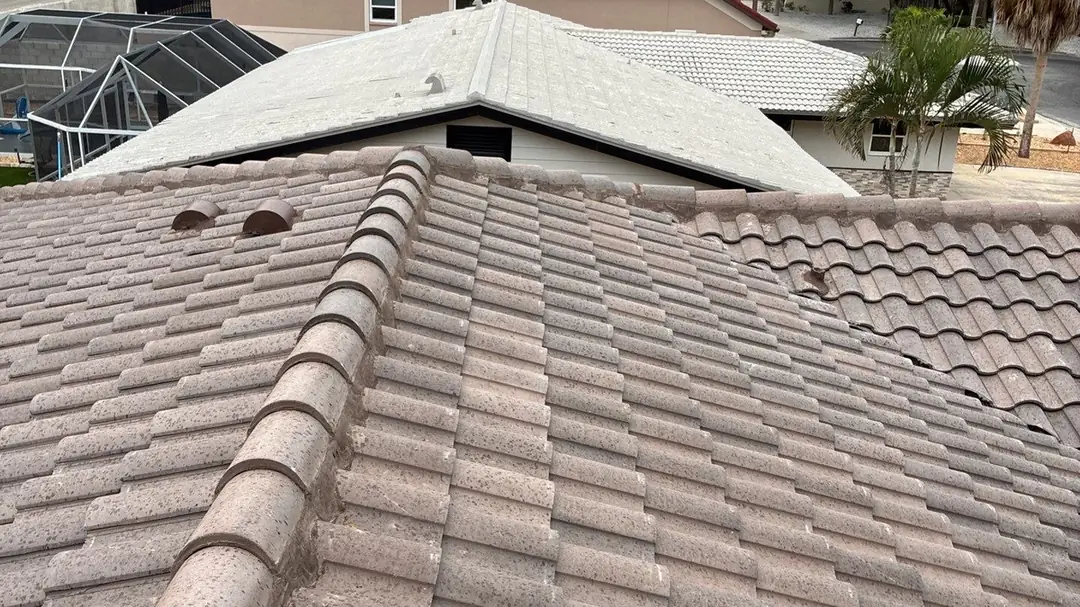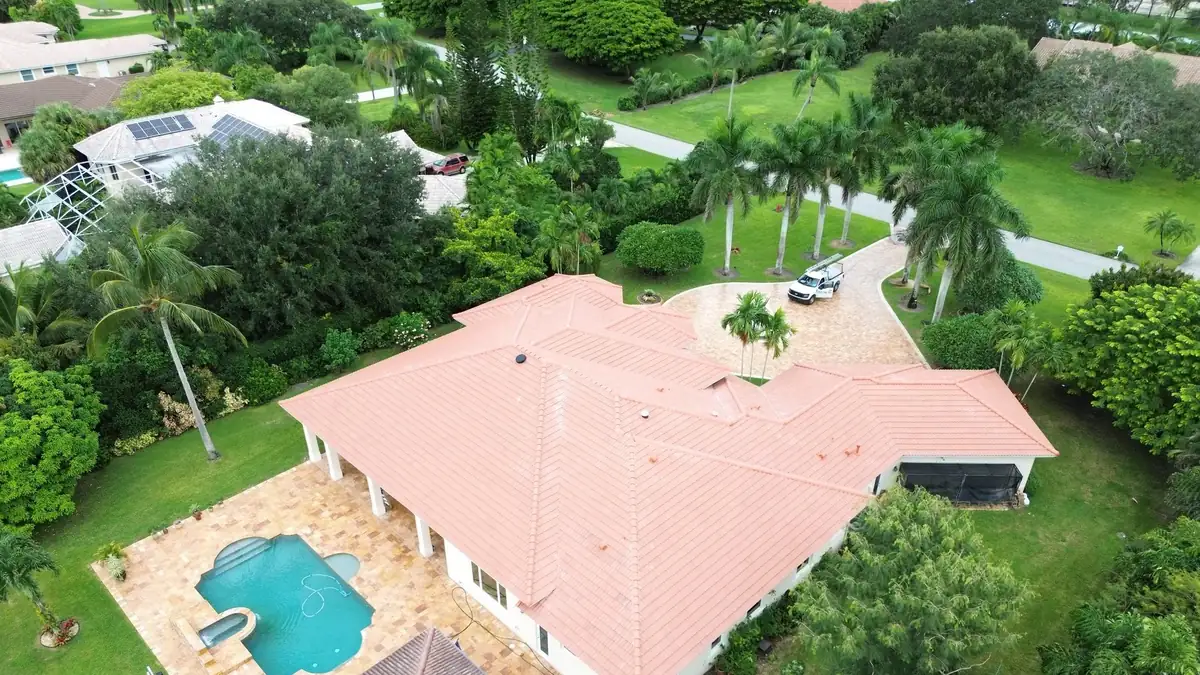
Tile is one of the most recognizable roofs in Florida. You'll see it on homes from Sarasota to Boca Raton and Vero Beach. If tile is on your list for a roof replacement, the next question is usually which kind: concrete or clay.
Both are handsome, long-lasting choices. Neal Roofing installs tile roofs on both of Florida's coasts, on Gulf Coast and Atlantic coast homes alike. Here's how the two compare, so you can choose with confidence.
Clay vs concrete tile at a glance
| Clay tile | Concrete tile | |
|---|---|---|
| What it's made of | Natural clay or shale, shaped and then fired in a kiln | Cement, sand and other aggregates, molded and cured |
| Look and color over time | The color is fired into the tile and holds for the life of the roof | Color comes from pigment mixed into the tile or a coat on its surface, and the surface lightens as it weathers |
| Weight | Usually lighter than concrete in a similar profile, though weights vary by product | Usually heavier than clay in a similar profile, though weights vary by product |
| Upkeep | Periodic cleaning keeps it looking its best | Periodic cleaning, and the surface can be resealed or recoated to refresh the color |
| Best fit by home style | Classic Mediterranean and Spanish-style homes | A wide range of styles, from Mediterranean to contemporary |
Cost depends on your roof's size and shape and the tile you choose, so we cover it separately in what a tile roof costs. For a closer look at each option on its own, see our pages on clay tile roofs and concrete tile roofs.
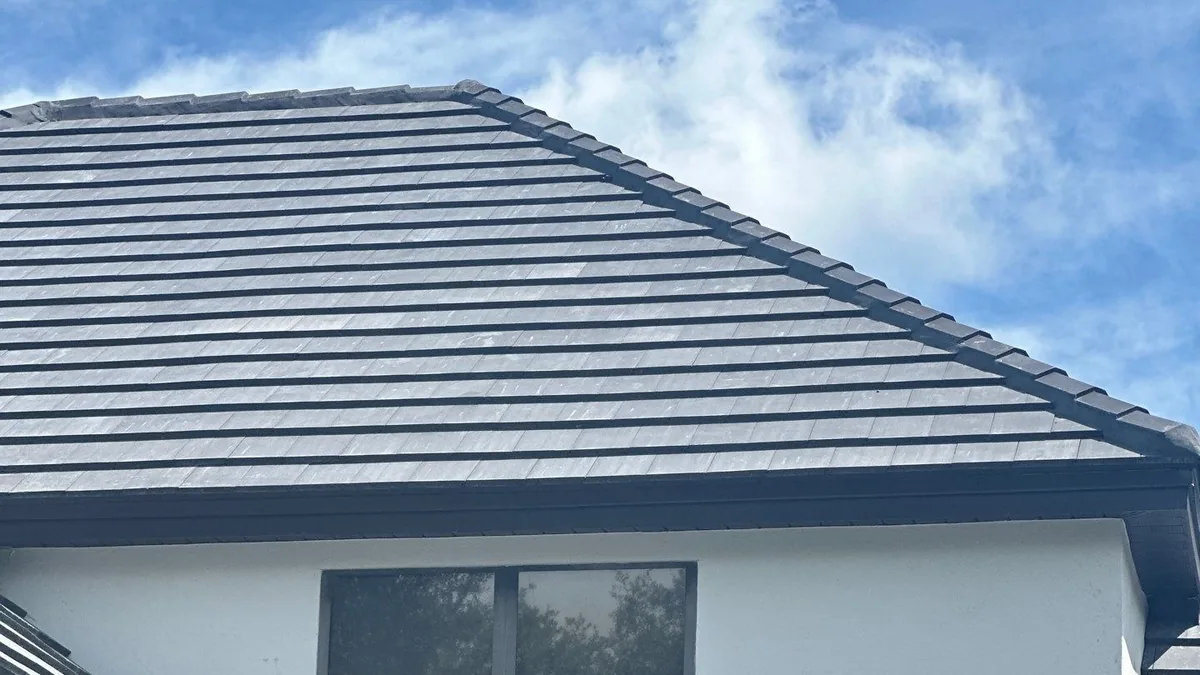
How each tile handles Florida sun, rain and salt air
Sun. Clay gets its color in the kiln, so the color runs through the tile and holds up to the sun for the life of the roof. Concrete is different. Manufacturers explain that the outer layer of a concrete tile is a little softer than the body, and it slowly wears away in the early years. That exposes more of the sand inside and lightens the color. It's a change in appearance, not strength. The tile keeps doing its job, and the surface can be cleaned and resealed if you'd like to refresh it.
Rain and humidity. Florida's warm, damp air means mildew and algae can grow on any tile roof. It isn't pretty, but manufacturers note it doesn't harm the tile itself. A professional cleaning brings the roof back.
Salt air. On both coasts, plenty of homes sit close to the water, from the Gulf barrier islands around St. Pete Beach and Clearwater to Atlantic-side neighborhoods in Jupiter and Vero Beach. Clay and concrete are both masonry, so the parts of a tile roof that need the most care near salt water are the metal ones: the fasteners and flashing. That's one reason Florida's tile installation manual calls for corrosion-resistant fasteners. Near the coast, ask your roofer how the metal parts of the roof are chosen and installed, not just which tile goes on top.
Whether you live in Tampa or a few blocks from the Atlantic, the takeaway is the same. Either tile can be a beautiful, lasting roof in Florida. The details underneath decide how well it performs.
Why the underlayment matters more than the tile
Every tile roof has two layers working together. The tiles on top shed most of the rain. Beneath them sits the underlayment, a layer installed over the roof deck before any tile goes on. It's the backup that protects your home if water ever gets past the tiles.
Here's the part many homeowners don't hear. The tile itself usually outlasts the layer beneath it. According to the Tile Roofing Institute's technical director, it's the long-term performance of that secondary layer that determines the life of the whole roof. So when you compare clay and concrete, give just as much attention to:
- The underlayment system your roofer will use
- How the flashing is handled at valleys, walls and edges
- How the tiles are fastened to the roof
In Florida, roofing products, including tiles and underlayments, have to be approved for use under the state's product approval rules. It's fair to ask which approved system is going on your home.
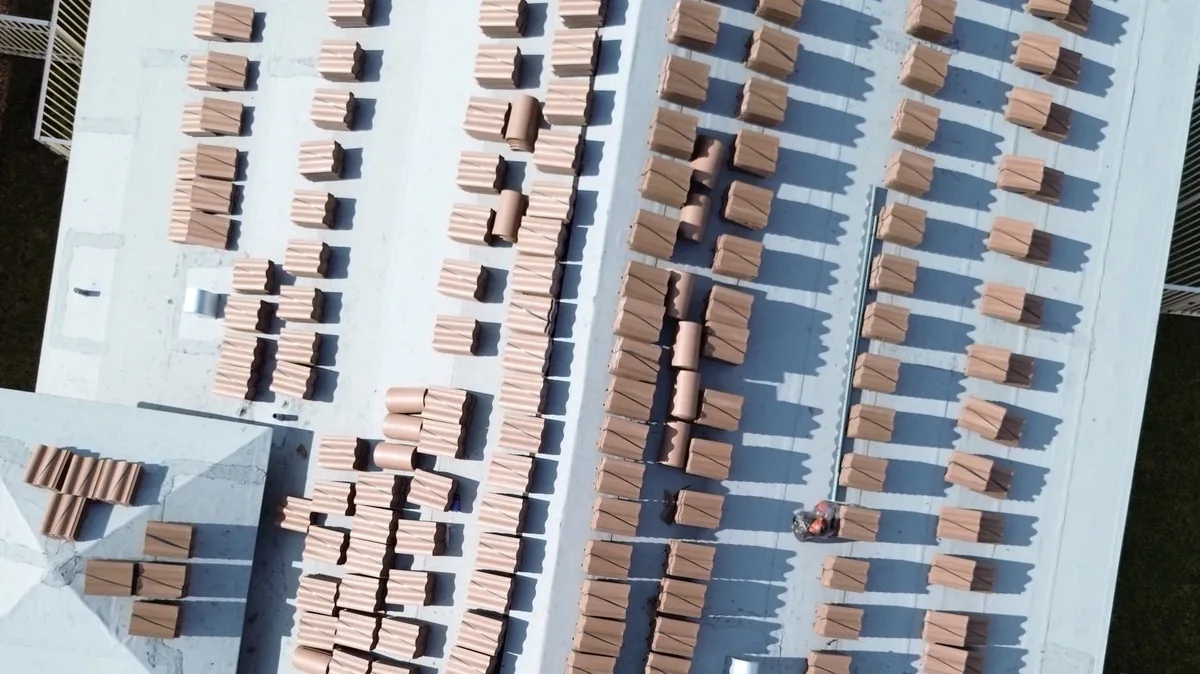
On a full replacement, the old tile and underlayment come off, so the roof deck is exposed. Our crew checks the deck and re-nails it where needed before the new underlayment goes on. If you've heard that tile is fragile or only right for certain climates, our post on common tile roof myths clears up a few of those ideas.
Style, HOAs and matching your neighborhood
Clay tile has the classic look many people picture when they think of a Mediterranean or Spanish-style home in Florida. Concrete gives you more profiles to choose from, from rounded barrel shapes to flatter tiles that suit a more contemporary home.
If you live in a planned community, your HOA may narrow the choice for you. Many Florida HOAs set rules for tile profile and color, and Florida law lets an association review a home's exterior appearance to the extent its governing documents allow. Before you fall in love with a tile, pull your HOA's approved list. Bring it to your estimate, and you can compare options that already fit your community's rules.
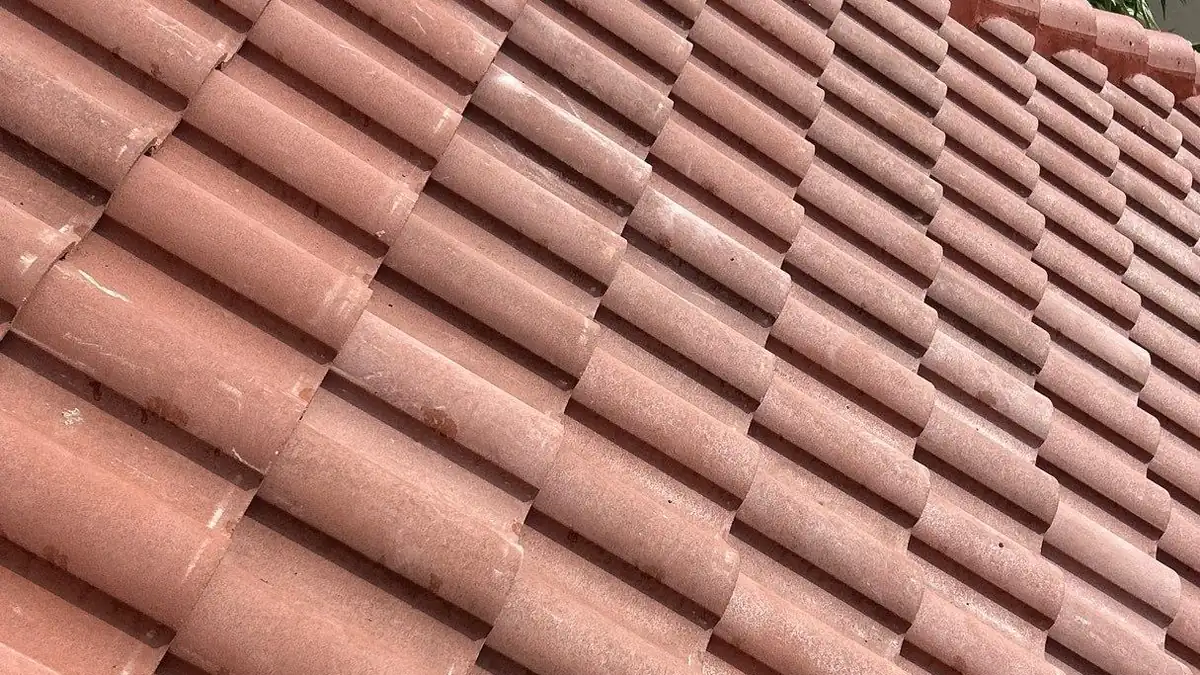
If you'd like to see how different tiles look on real Florida homes, browse the tile roofs we've installed.
Which tile is right for your home?
There's no single winner. Here are three common situations:
- You love the classic Mediterranean look and want color that stays true. Clay is a natural fit, since its color is fired in and holds for the life of the roof.
- You want a particular profile or color, or a cleaner, more contemporary look. Concrete offers more choices and is usually the lower investment of the two.
- Your HOA has an approved list. Start there. Either tile may be on it, and the right pick is the one that suits your home and your community's rules.
If your home has never had a tile roof, there's one more step. Your roofer should confirm the structure can carry tile before you choose.
Frequently asked questions
Is clay or concrete tile better for a Florida home?
Neither is better for every home. Clay holds its color for the life of the roof and has a classic Mediterranean look. Concrete comes in more profiles and colors and is usually the lower investment of the two. The right choice depends on your home's style, your HOA's rules and your budget.
Do clay and concrete tile roofs last the same amount of time?
Both tiles can outlast the layer beneath them. On most Florida tile roofs, the underlayment wears out before the tiles do, so how well the underlayment is installed matters as much as which tile you choose.
Which tile is heavier, clay or concrete?
Concrete tile is usually heavier than clay tile of a similar profile, though weights vary by product. If your home has never had a tile roof, your roofer should confirm the structure can carry tile before you choose.
Can my HOA decide which tile I use?
Many Florida HOAs set rules for tile profile and color. Check your HOA's approved list before you choose a tile.