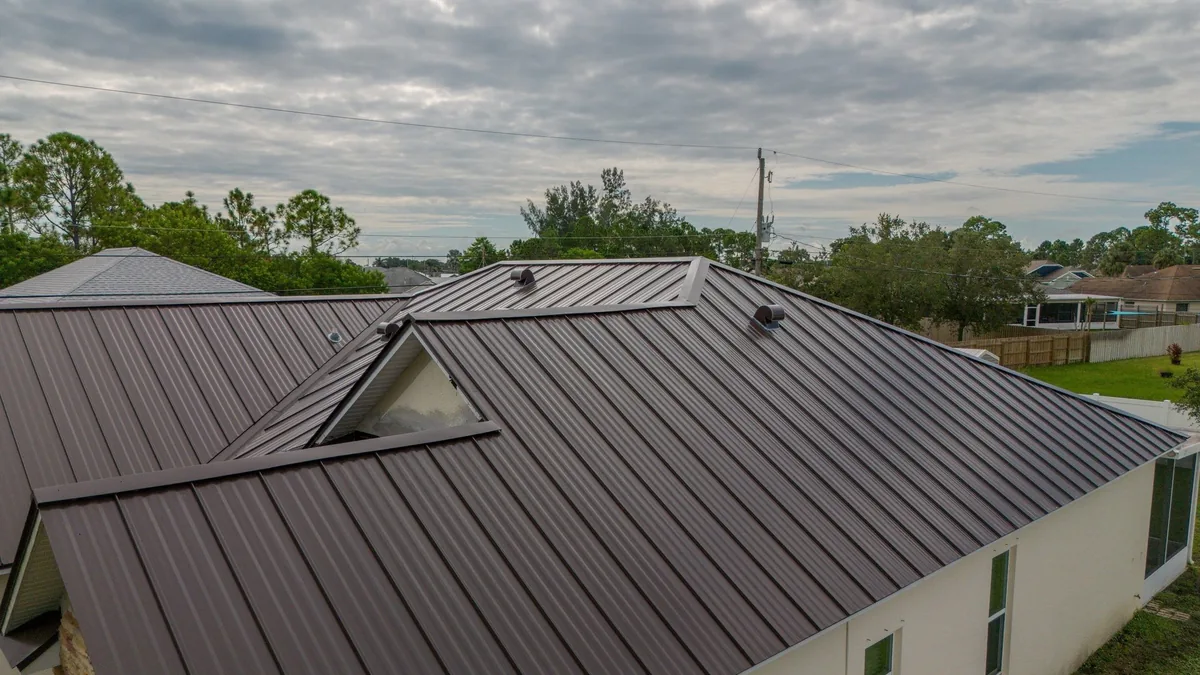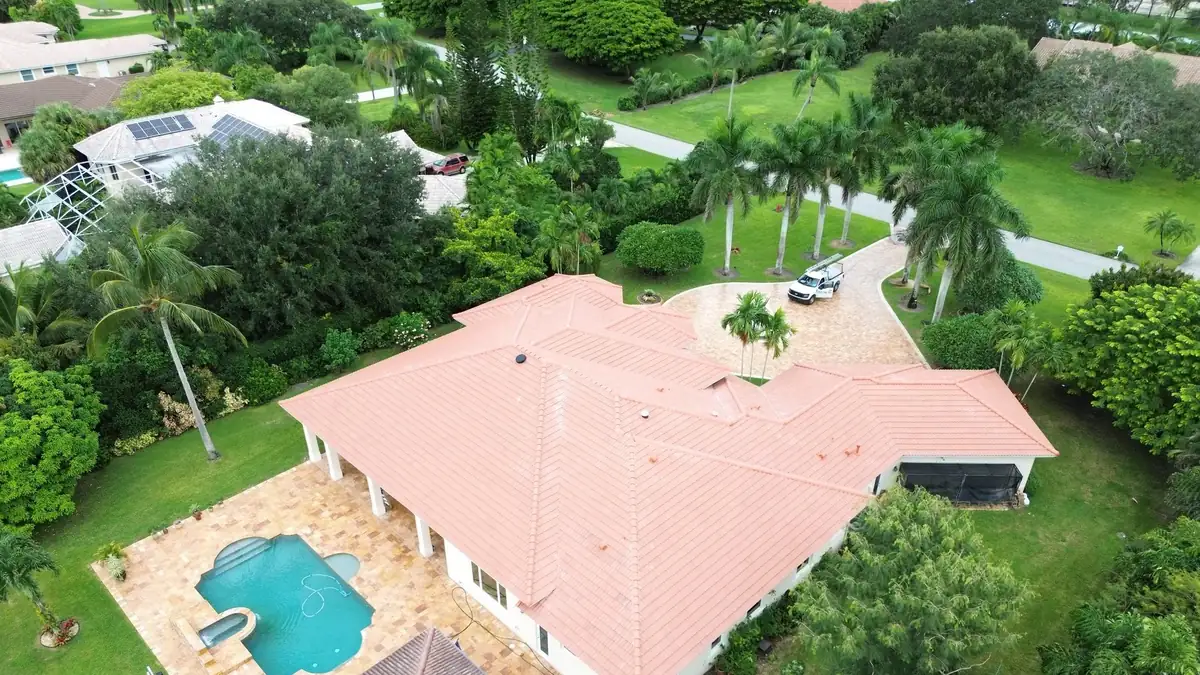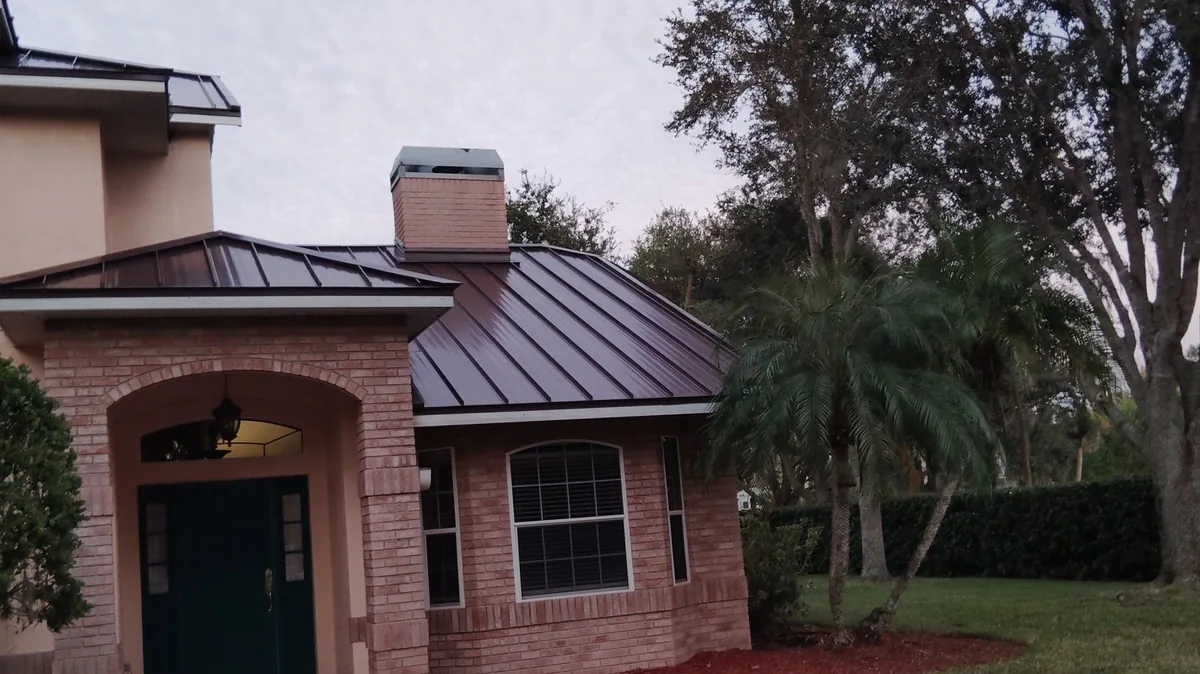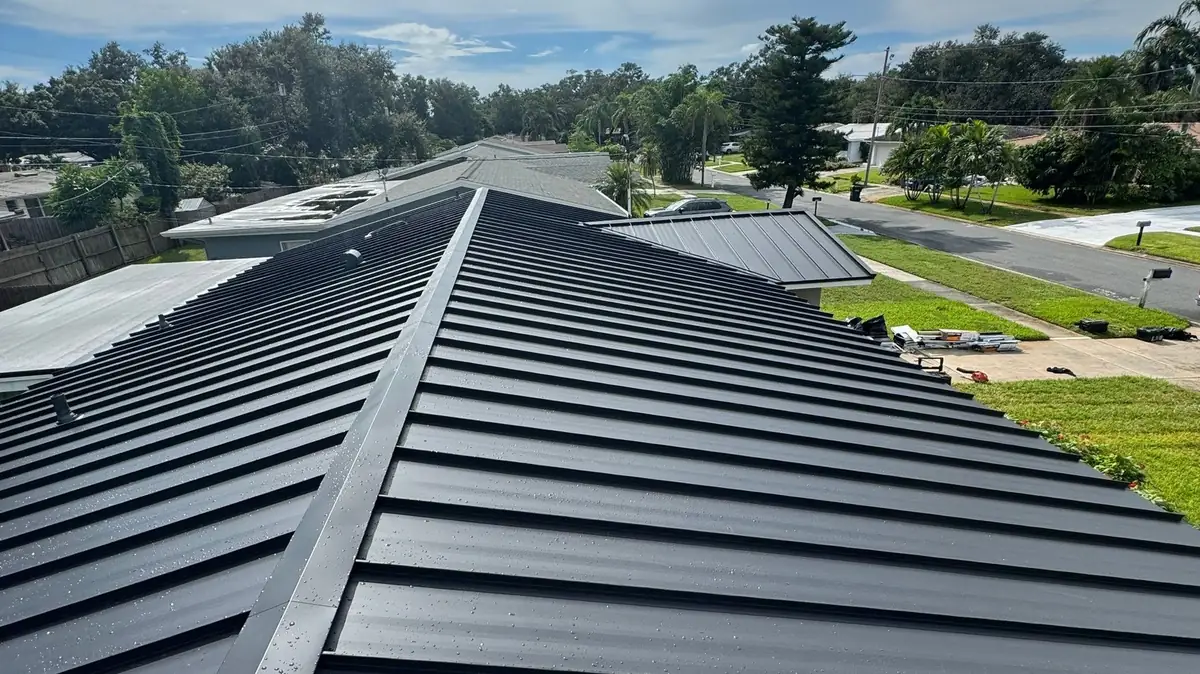
Metal roofs are a familiar sight all over Florida, from the Gulf beach towns of Tampa Bay to the Atlantic coast. Once you've decided metal is right for your home, the next choice is the panel system, and the two you'll hear about most are standing seam and exposed-fastener panels.
Neal Roofing replaces roofs on both of Florida's coasts. Here's a plain-language look at how the two systems differ, so you can choose with confidence.
Standing seam vs exposed-fastener at a glance
| Standing seam | Exposed-fastener | |
|---|---|---|
| Fastening | Concealed clips or fastening flanges hidden under the raised seams | Screws with sealing washers driven through the face of the panel |
| Look | Clean, flat panels with crisp vertical lines | Ribbed or corrugated panels with visible screw heads |
| Upkeep over time | Less frequent, since the fasteners are protected from sun and rain | Plan on periodic checks of the screws and washers |
| Panel finish options | Often paired with longer-lasting, premium paint systems | Often uses more economical paint systems, with premium finishes available |
| Best fit by home style | Contemporary, coastal and Mediterranean-influenced homes, and lower-pitch roofs | Old Florida, cottage and farmhouse-style homes on steeper roofs |
Cost depends on your roof's size and shape, the metal and the finish, so we cover it separately in our guide to metal roof cost. For the full range of systems we install, see our metal roofing page.
How standing seam works
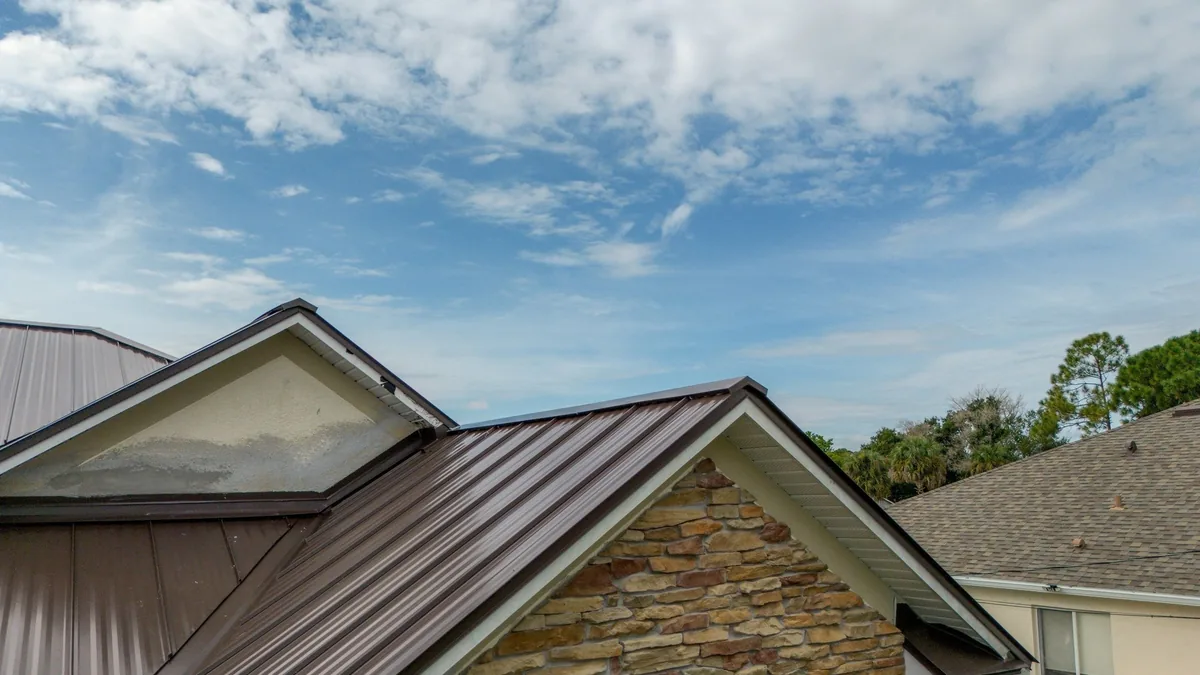
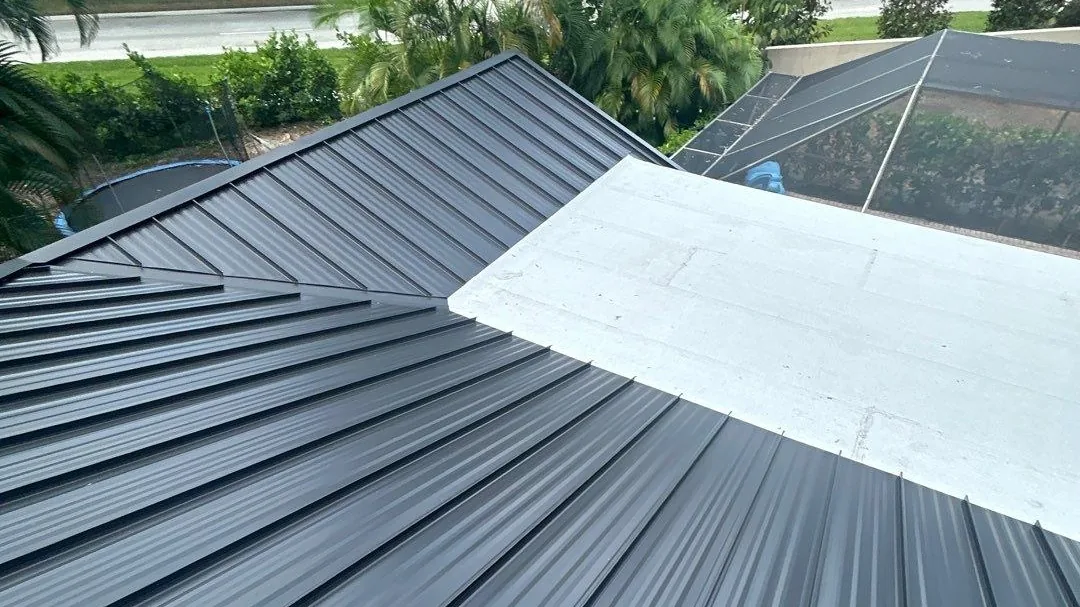
A standing seam roof is made of long metal panels that usually run from the eave (the lower edge of the roof) up to the ridge. Where two panels meet, their edges turn up and lock together, forming the raised seam the system is named for. That seam sits above the flat part of the roof, which helps keep water moving off the panels.
The panels are held down by clips or fastening flanges tucked under those seams, so no screws go through the face of the panel. Because the fasteners are hidden from sun and rain, they're protected from the wear that exposed parts face. Many clip systems also let the metal expand and contract as it heats and cools through the day, which helps the roof stay tight over time.
Standing seam takes skilled hands and specialized equipment to install well. That's one reason it's a premium choice, and why it's worth asking any roofer how much standing seam work their crews do.
How exposed-fastener metal works
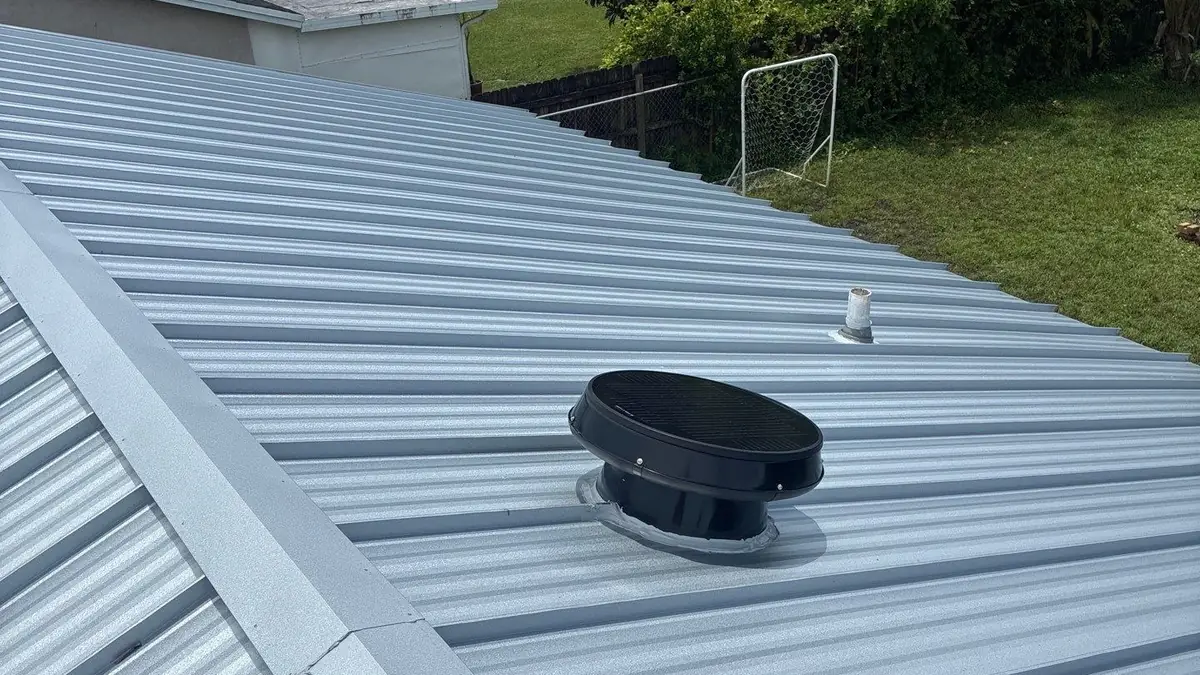
Exposed-fastener panels, such as corrugated and ribbed panels, overlap one another along their edges. Screws go straight through both layers of metal into the roof below. Each screw has a washer under its head that seals the hole.
It's a proven, straightforward system, and the wider panels are a big part of why it's usually the lower investment of the two. The trade-off is upkeep. Metal moves a little as it warms and cools, and over the years that movement can loosen screws. The washers also age in the sun. Neither problem appears overnight, but it means an exposed-fastener roof needs periodic checks, and some screws or washers will need to be tightened or replaced over its life.
Exposed-fastener panels also need a steeper roof pitch to shed water well, so they aren't the right fit for every roofline.
Steel or aluminum near the coast
Both systems come in steel or aluminum, and on Florida's coasts that choice matters as much as the panel style.
Aluminum doesn't rust the way steel can, which is why it's the metal many manufacturers recommend for homes near salt water. That's worth weighing if you live in a Gulf beach town like St. Pete Beach or Palm Harbor, or near the Atlantic in Jupiter or Stuart. Steel panels with a protective coating are common farther inland, in communities like Lakewood Ranch and Wesley Chapel, depending on how close a home sits to the water.
Metal manufacturers' warranties often spell out how close to salt water a given metal and finish can be installed. Ask your roofer which metal and finish suit your home's distance from the coast, and ask to see the warranty terms for the panels they recommend.
Florida Product Approval and permits
Florida requires roofing products, metal roofing included, to be approved for use under the state's product approval rules. Before you sign, it's fair to ask which approved panel system is going on your home.
A full roof replacement generally needs a building permit from your city or county, and inspectors check the work along the way. Your roofer should handle the permit and schedule the inspections, so you don't have to manage that paperwork yourself.
Which metal roof fits your home?
There's no single right answer. Here are a few ways to think about it:
- You want the cleanest look and the least upkeep, and you plan to stay for many years. Standing seam's hidden fasteners and crisp lines make it a natural fit.
- Your home has Old Florida, cottage or farmhouse character, on a steeper roof. Exposed-fastener panels suit that look and are usually the lower investment.
- You live close to salt water. Start with the metal and finish, then choose the panel style. Aluminum is the common choice right on the coast.
- Your roof has low-slope sections. Standing seam is usually the better match, since exposed-fastener panels need more pitch.
Curious how a metal roof can pay off over time? Our post on how a metal roof adds value covers that.
Frequently asked questions
What is the difference between standing seam and exposed-fastener metal roofing?
Standing seam panels lock together at raised seams, and the fasteners are hidden under the panel. Exposed-fastener panels, such as corrugated and ribbed panels, are fastened through the face of the panel with screws, so the fasteners stay visible.
Is exposed-fastener metal a good choice for a Florida home?
It can be. Exposed-fastener metal suits many Old Florida and coastal-style homes and is usually the lower investment of the two. Because its screws pass through the panel, the fasteners and their washers need periodic checks over the life of the roof.
Which metal roof needs less maintenance?
Standing seam usually needs less, because its fasteners are hidden from sun and rain. With exposed-fastener panels, plan on having the exposed screws checked and tightened or replaced over time.
Should I choose steel or aluminum panels?
Many homeowners near salt water choose aluminum because it resists corrosion. Steel panels are common farther inland. Ask your roofer which metal and finish suit your home's distance from the coast.