
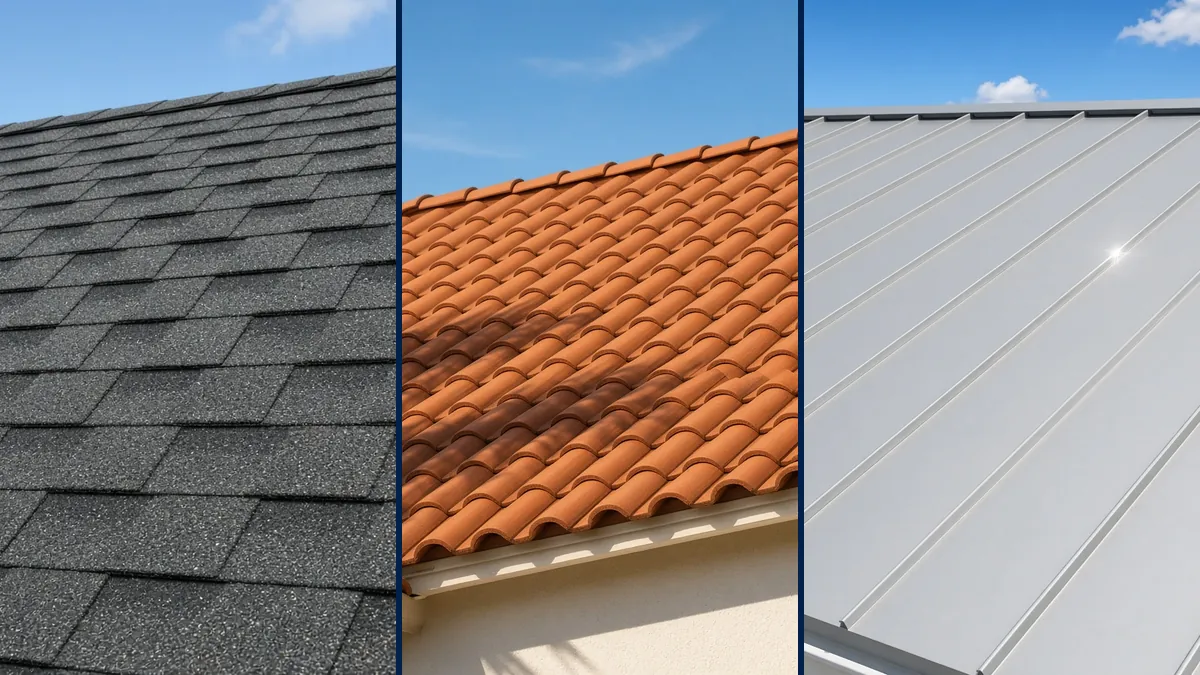
There's no single best roof for every Florida home. Shingle is the lowest upfront investment of the three. Tile gives the classic look many HOAs ask for. Metal is the lightest and usually stays in service the longest. Whichever you pick, how it's installed, from the deck to the underlayment, matters as much as the material.
Neal Roofing installs all three. We quote based on what you want and need from your roof, and we can quote all three side by side. This guide walks through how they compare on Florida's sun, heat and rain, how each looks on different home styles, what each asks of your roof framing, and how HOA rules and permits fit in. At the end there's a quick way to narrow it down.
Metal, Tile and Shingle at a Glance
| Architectural shingle | Concrete or clay tile | Metal | |
|---|---|---|---|
| What it is | Layered asphalt shingles with a granule surface | Molded concrete or kiln-fired clay tiles over an underlayment | Steel or aluminum panels or metal shingles |
| Upfront investment | Lowest of the three | Higher | Higher |
| Service life in Florida | Shortest of the three | Long-lived tile; the underlayment beneath usually wears out first | Usually the longest of the three |
| Weight | Light | Much heavier | Lightest |
| Look | Wide range of colors and profiles | Classic Mediterranean and Spanish styles; flat profiles for modern homes | Clean lines, from standing seam to shingle-look metal |
| Heat | Lighter colors reflect more of the sun's heat | Light colors and the air space under the tile help | Reflects much of the sun's heat, especially in light finishes |
| Upkeep | Easiest to repair in small sections | Tiles can crack if walked on carelessly | Exposed-fastener panels need screws checked over time |
| Install time | Fastest | Usually longer than shingle | Usually longer than shingle |
| Often a fit for | Shorter ownership plans and tighter budgets | HOA communities and classic architecture | Long-term owners who want the lightest roof |
Every one of these can be a good roof on a Florida home. The rest of this guide explains the trade-offs behind each row.
What Florida's Climate Asks of a Roof
From Palm Beach County to the Gulf Coast, a Florida roof works hard. Long, hot summers and strong sun break down roofing materials faster than in milder places. Afternoon rain is a regular part of the summer, and homes near the coast also deal with salt air. Here's what that means when you compare materials.
- Durability under sun and heat. Ask how a material holds up to years of UV and heat, not just how it looks on day one. Shingle granules wear away over time, tile and metal finishes fade at different rates, and color choices affect how much heat the roof soaks up.
- Water shedding and the layer underneath. Every roof sheds most of the rain on its surface, but the underlayment beneath is the backup that keeps water out of your home. A good material over a poor underlayment is still a weak roof.
- Code approval and fastening. In Florida, roofing products have to be approved for use under the state's product approval rules, and the roof has to be installed to the Florida Building Code. Ask which approved system is going on your home and how it will be fastened and secured.
- Salt air near the coast. On tile roofs, the metal parts, such as fasteners and flashing, need the most care near salt water. On metal roofs, the metal and its finish should be matched to your home's distance from the water.
Asphalt Shingle Roofs in Florida
Pros and cons
Architectural shingles are layered for a dimensional look, they come in a wide range of colors, and they're the lowest upfront investment of the three materials. They're also the quickest to install, and a damaged section can often be repaired without replacing large parts of the roof. Designer shingles go a step further in appearance and can mimic the look of more expensive materials.
The trade-off is service life. Florida's sun, heat and humidity are hard on asphalt, so a shingle roof here generally needs replacing sooner than tile or metal. Signs of wear include lost granules, curling and cracking.
Who should choose shingle
Shingle often makes sense if you plan to sell within several years, if you want the lowest upfront investment, or if your HOA and home style point to a shingle roof. It also suits many roof shapes, including steep, complex roofs with lots of valleys. See our shingle roofing page for the options we install.
Tile Roofs: Concrete and Clay
Pros and cons
Tile is one of the most recognizable roofs in Florida. It has the classic look many people picture on a Mediterranean or Spanish-style home, and it's often on HOA approved lists. Concrete and clay tiles are long-lived masonry products. On the other side of the ledger, tile is a higher upfront investment than shingle, it's much heavier, and individual tiles can crack if someone walks on the roof carelessly, so service visits should be done by people who know where to step.
The underlayment is the real service life
Here's the part many homeowners don't hear. On most Florida tile roofs, the tiles outlast the underlayment beneath them. The tiles shed most of the rain, but the underlayment is the layer that keeps water out if it gets past them, and it's the underlayment that usually decides when a tile roof needs replacing. When you compare tile quotes, ask about the underlayment system, how flashing is handled at valleys, walls and edges, and how the tiles will be fastened.
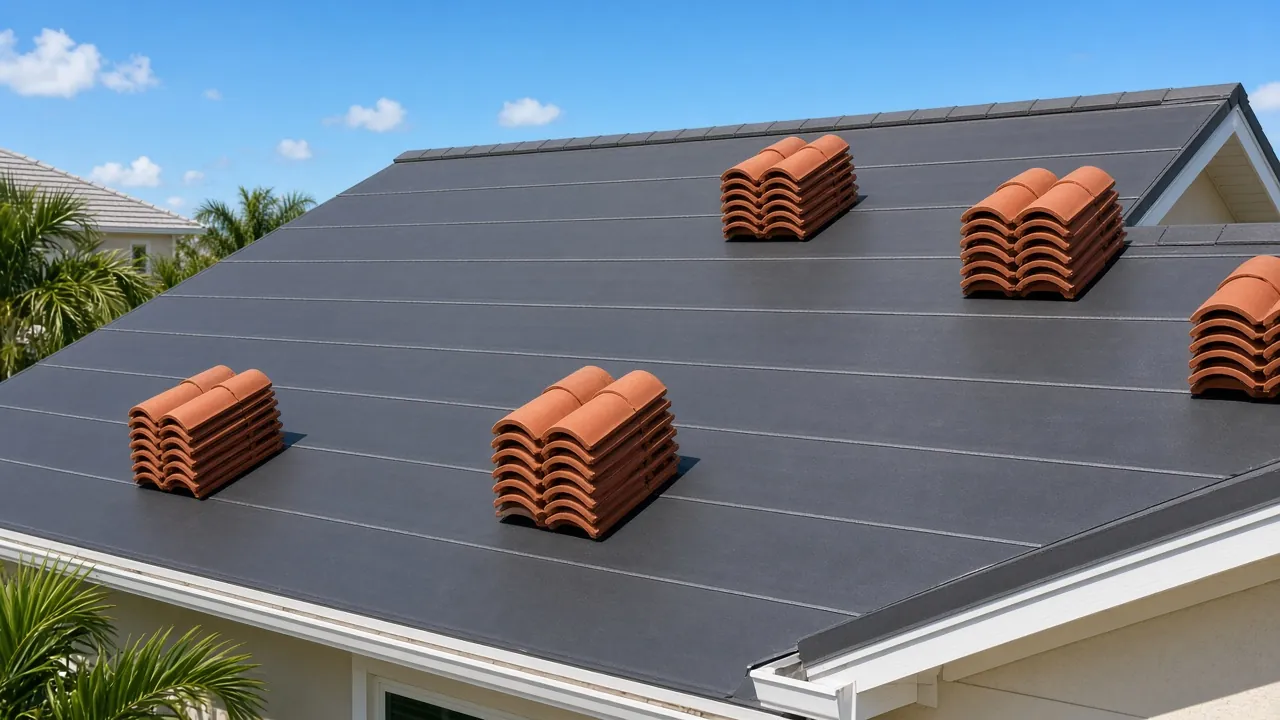 Roofing material example
Concrete vs clay, briefly
Clay gets its color in the kiln, so it holds that color for the life of the roof. Concrete comes in more profiles and colors and is usually the lower investment of the two. Our guide to concrete vs clay tile goes deeper, and you can read more about concrete tile roofs and clay tile roofs. If you've heard that tile is fragile or only right for certain climates, our post on tile roof myths clears up a few of those ideas.
Metal Roofs: Standing Seam and Exposed-Fastener
Pros and cons
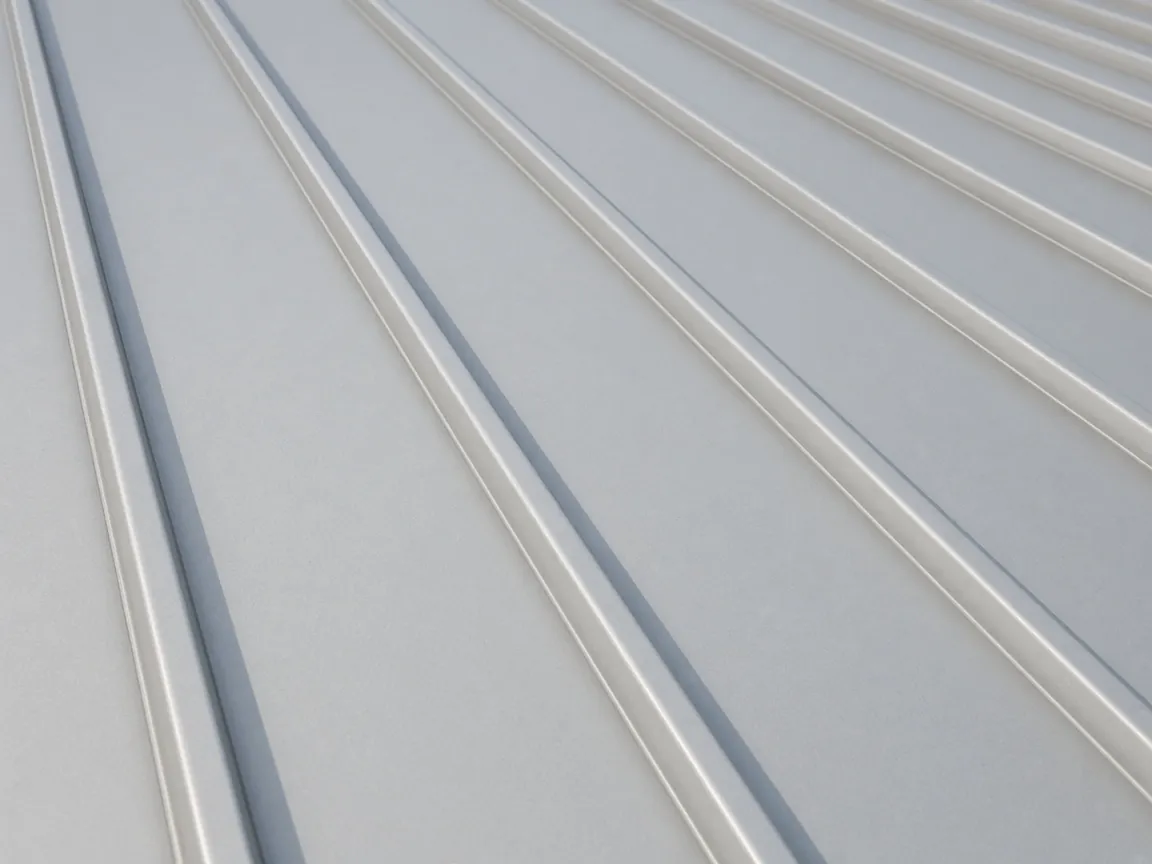
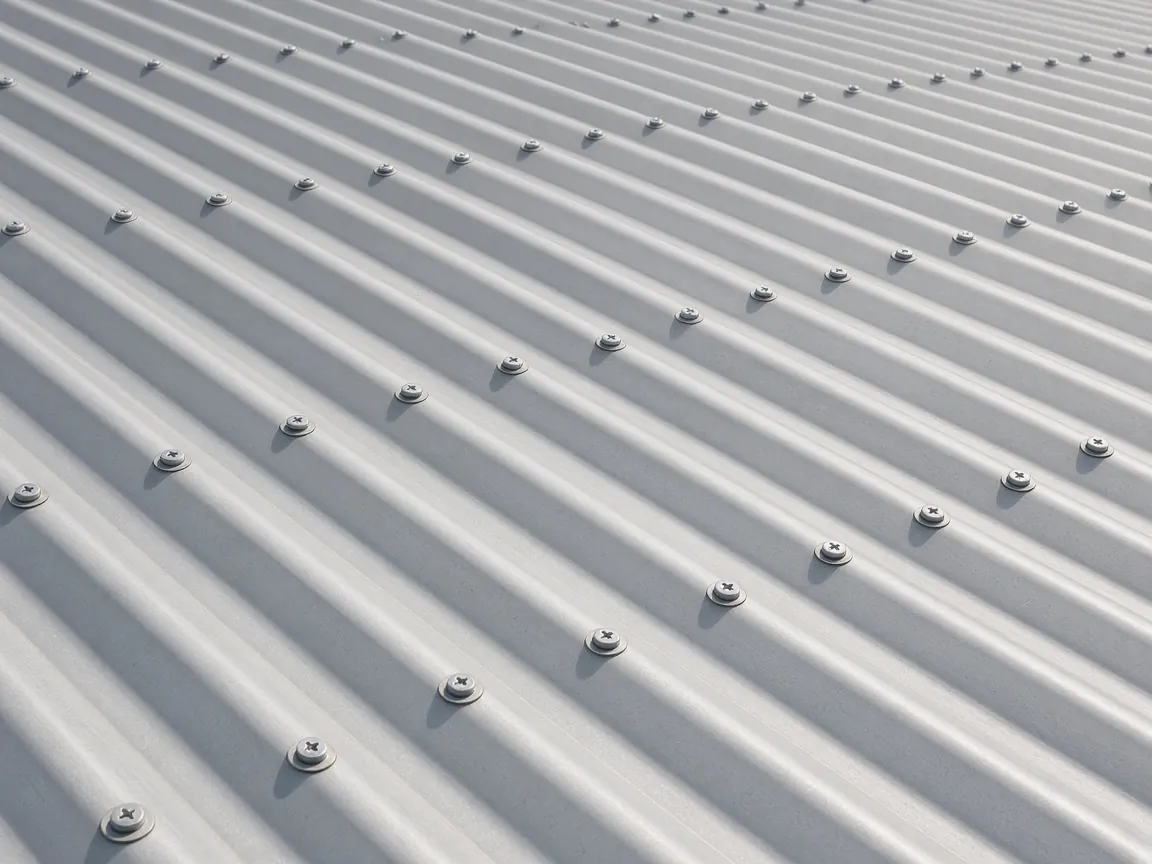
Metal is the lightest of the three materials, and it usually stays in service the longest. It reflects much of the sun's heat, especially in lighter finishes, and it gives a home clean, crisp lines. Standing seam panels hide their fasteners under raised seams, while exposed-fastener panels are screwed through the face of the panel and need those screws checked and tightened or replaced over time. Metal shingles give a more traditional look with a metal roof underneath. Neal installs all three styles, and which one fits depends on your area, local code and what's right for the property. The trade-offs are a higher upfront investment than shingle and a look that not every HOA allows. Our guide to standing seam vs exposed-fastener metal compares the two panel types side by side.
 Roofing material example
 Roofing material example
Near the coast: matching the metal to your home
Whether steel or aluminum is the better fit depends on how close you are to the water, what you need and want from the roof, and local code. Metal roof warranties often spell out how close to salt water a given metal and finish can be installed, so we'll recommend a metal and finish for your home and walk you through the warranty terms for those panels.
Are metal roofs loud in the rain?
In our experience, no more than other roofs. Installed over solid decking and underlayment, a metal roof isn't noticeably louder inside during rain. Your attic insulation and ventilation play a bigger part in what you hear than the roofing material does.
Is metal worth it in Florida?
It depends on how long you'll stay. A simple way to compare materials is to divide the upfront investment by the years of service you expect from the roof while you own the home. If you plan to stay a long time, a longer-lasting roof spreads its investment over more years. If you plan to move soon, the lower upfront investment of shingle may matter more. Read more on our metal roofing page.
Heat and Energy Use
Florida homes spend a lot of energy on cooling, and your roof is the surface that takes the most sun. Three things help.
- Reflectivity. Roofing materials and colors that reflect more of the sun's heat put less of it into your attic. Lighter colors reflect more heat than dark ones on all three materials.
- Insulation and ventilation. Good attic insulation and ventilation slow the heat moving from the roof into your living space, whichever material is on top.
- Cool roof options. Reflective shingles, metal with a reflective finish, and light-colored clay or concrete tile are all ways to keep a roof from soaking up as much heat.
If you're still weighing colors, our look at roof colors for Florida homes shows how color choice and heat go together.
Looks and Home Style
Your roof is one of the largest surfaces people see on your home, so it should suit the house.
- Color and texture. Each material comes in a range of colors and textures. Bring photos of your home's walls and trim to your estimate so you can compare samples against them.
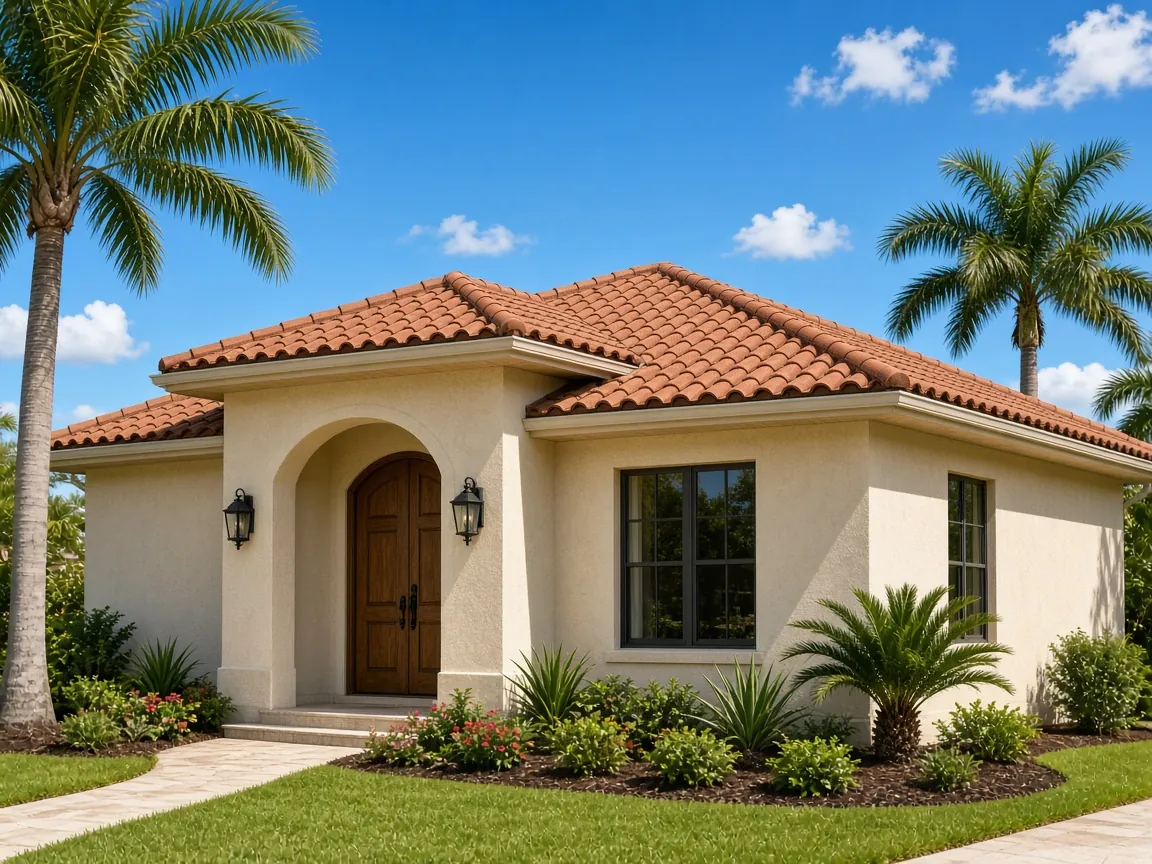
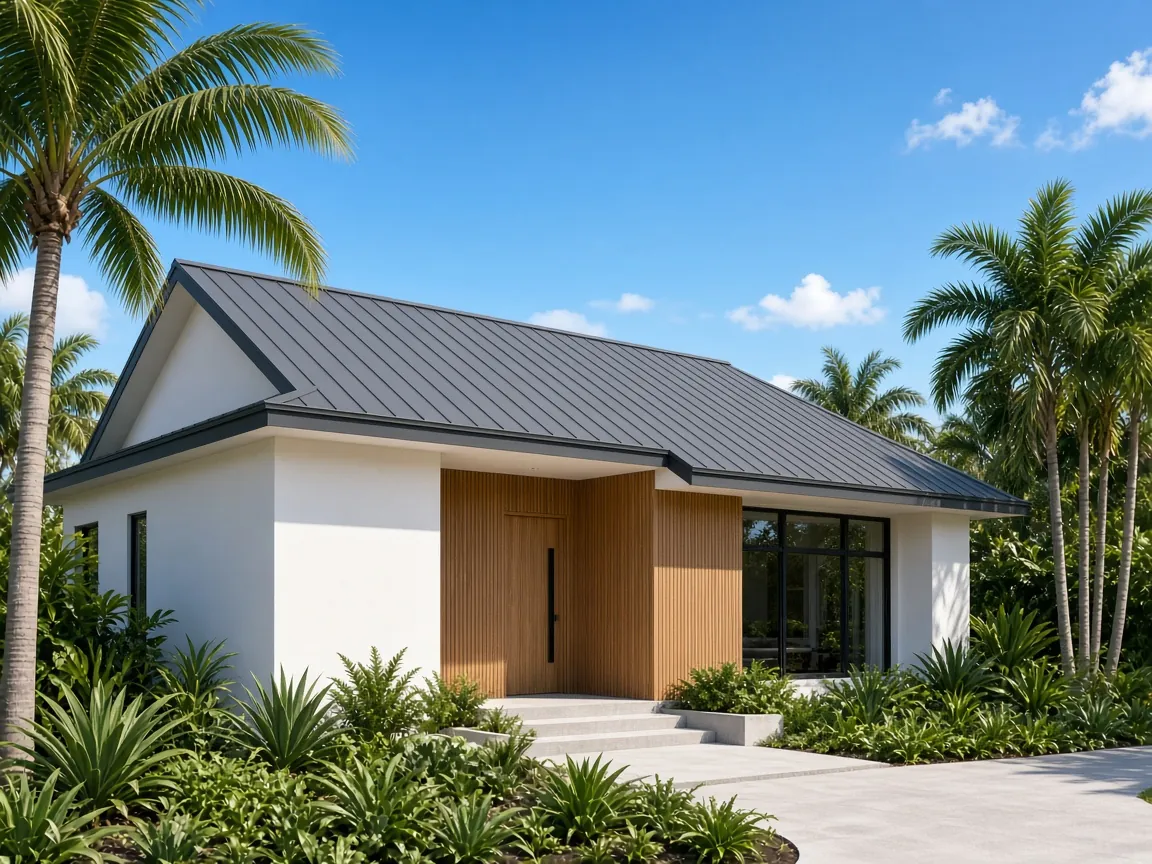
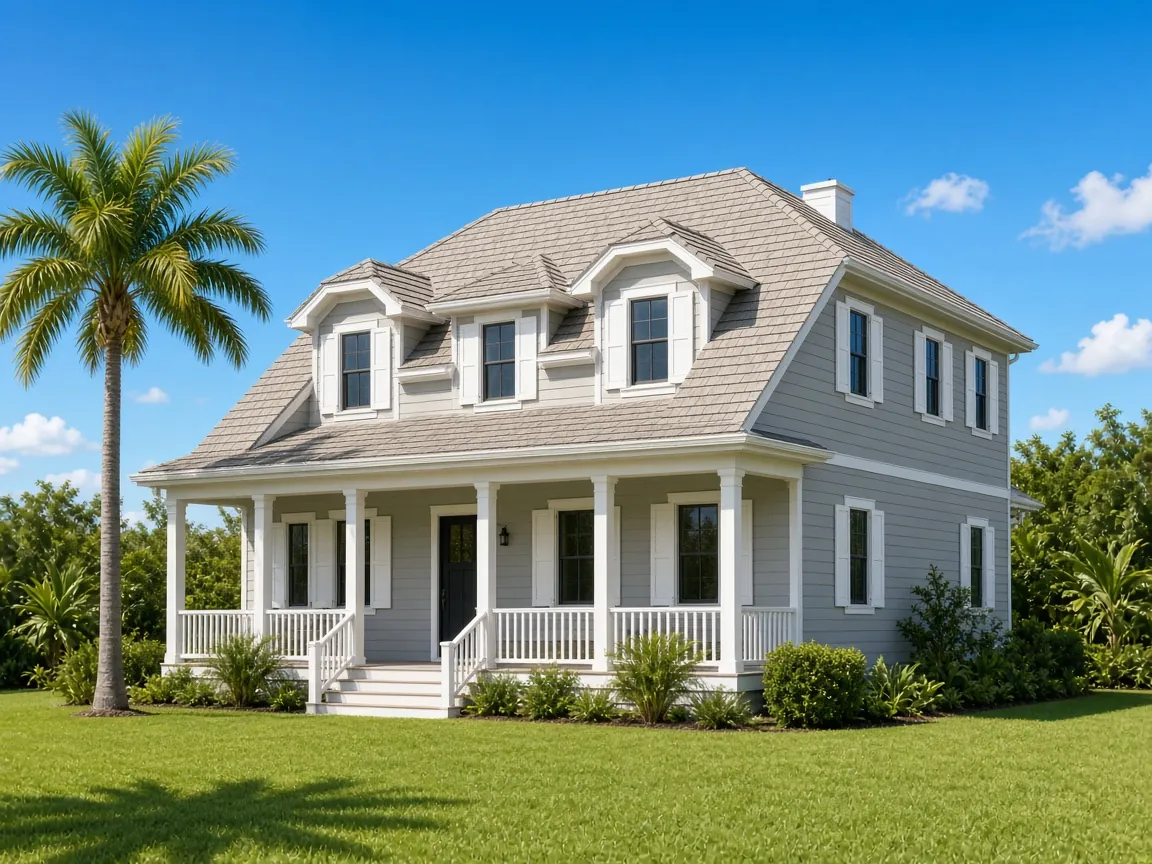
- Architectural style. Clay and barrel tile suit Mediterranean and Spanish-style homes. Flat tile and standing seam metal suit contemporary homes. Architectural shingle fits traditional and colonial styles and many others.
- Long-term appearance. Some roofs need more upkeep to look their best. Tile and shingle can show mildew or algae in Florida's damp air and may need cleaning, and exposed-fastener metal needs its screws checked over time.
 Roofing material example
 Roofing material example
 Roofing material example
Weight, Structure and Switching Materials
The biggest physical difference between the three is weight. Metal is the lightest, and most metal systems weigh less than the shingles they replace, so a home built to carry shingles can usually carry metal. Tile is much heavier. If your home has never had a tile roof, your roof framing needs to be checked before you choose tile, and switching to tile may require structural work. Neal checks the framing and handles the framing work tile needs. Our guide to switching from shingle to tile or metal covers what changes.
HOA Approval and Permits
If you live in a planned community, your HOA may narrow the choice for you. Many Florida HOAs set rules for roof material, profile and color, so pull your HOA's approved list before you fall in love with a sample, and get the association's approval before materials are ordered. A full roof replacement in Florida also generally needs a building permit from your city or county, with inspections along the way. Neal helps with the HOA paperwork, pulls the permit and schedules the inspections. If you also have questions about how a new roof fits Florida's insurance rules, see our guide to Florida roof insurance requirements.
What a Replacement Looks Like With Neal
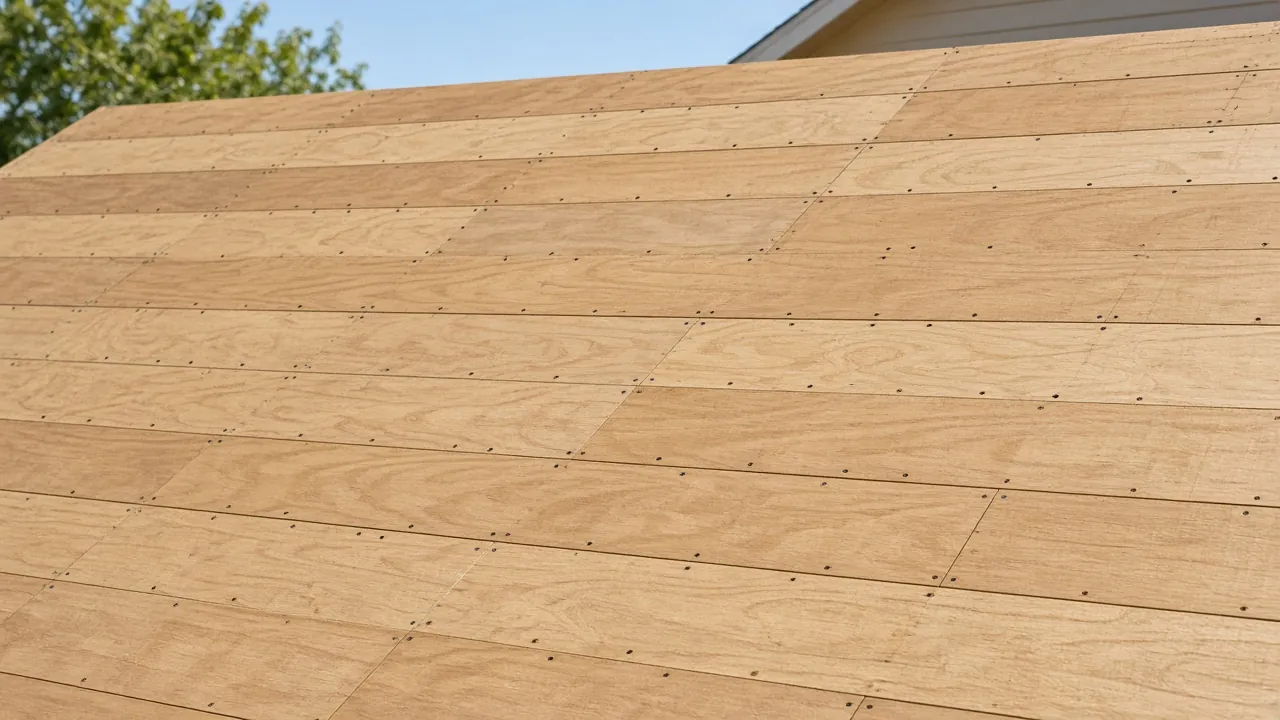
Whatever you choose, the old roof comes off down to the deck. Our crew will check the deck and re-nail it where needed, replace damaged wood, and install new underlayment before the new roof goes on. If you have solar panels, our solar partners can remove them before the job and reinstall them when the new roof is done. You'll get photo updates throughout, so you can see the work as it happens.
 Roofing material example
Warranties from 20 to 50 years, depending on the roofing system you choose. Financing is available, subject to credit approval; see our financing page.
Which Roof Should You Choose? A Quick Guide
- Planning to move within several years, or working with a tighter budget? Shingle is the lowest upfront investment and the quickest install.
- Your HOA requires tile, or you want the classic Florida look? Tile is a natural fit, as long as your roof framing checks out.
- Staying for the long haul and want the lightest roof with the longest service life? Metal is worth a close look.
- Still not sure? We'll inspect your roof and talk through shingle, tile and metal for your home, side by side.
Metal, Tile and Shingle Roof Questions
What is the best roof for a Florida home?
There's no single best roof. Shingle is the lowest upfront investment, tile gives the classic look many HOAs ask for, and metal is the lightest and usually stays in service the longest. The right choice depends on your budget, how long you'll stay, your HOA's rules and your home's style.
Is metal roofing noisy in the rain?
In our experience, no more than other roofs. Installed over solid decking and underlayment, a metal roof isn't noticeably louder inside during rain. Attic insulation and ventilation affect what you hear more than the roofing material does.
Can my house support a tile roof?
It depends on your roof framing. Tile is much heavier than shingle or metal, so if your home has never had a tile roof, the structure needs to be checked before you choose tile. Neal checks the framing and handles any framing work the tile needs.
Can I switch from shingle to metal in my HOA?
Only if your HOA's rules allow it. Many Florida HOAs set rules for roof material, profile and color, so check your association's approved list and get its approval before materials are ordered. Neal helps with the HOA paperwork.
Which roof is the best value over time?
It depends on how long you'll own the home. Divide the upfront investment by the years of service you expect while you live there. A longer-lasting roof spreads its investment over more years, while shingle's lower upfront investment can make sense for shorter stays.
How long does a tile roof last in Florida?
The tiles themselves are long-lived, but the underlayment beneath them usually wears out first. On most Florida tile roofs, the underlayment decides when the roof needs replacing, so how it's installed matters as much as which tile you choose.
Does roof color affect energy use in Florida?
Yes. Lighter roof colors reflect more of the sun's heat than dark ones, on shingle, tile and metal. Attic insulation and ventilation also make a difference in how much heat reaches your living space.
What warranty comes with a new roof?
Warranties from 20 to 50 years, depending on the roofing system you choose.
How do I reach Neal Roofing?
Call (561) 473-0192 or schedule a free estimate online. Neal Roofing has 4.9 stars, 1,000+ Google reviews.